
Executive Summary
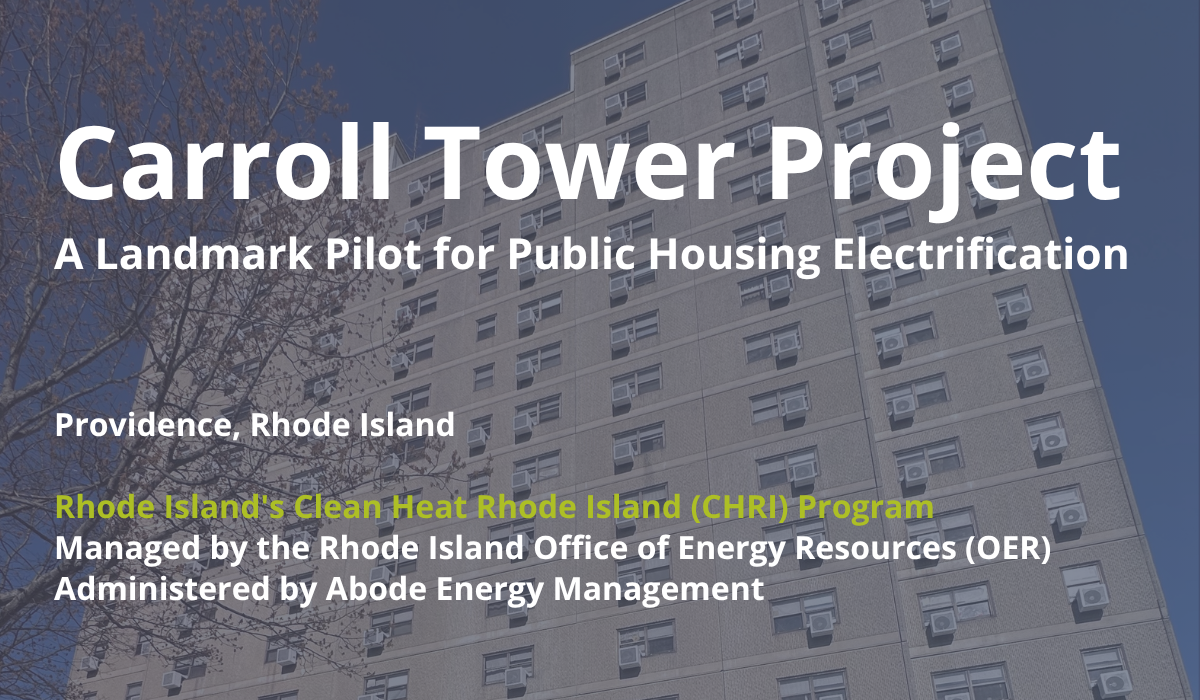
The Carroll Tower pilot project represents a landmark deployment of window heat pump technology in public housing, carried out under Rhode Island’s Clean Heat Rhode Island (CHRI) program. Managed by the Rhode Island Office of Energy Resources (OER) and administered by Abode Energy Management, this initiative replaced decades-old electric baseboard heating at Carroll Tower, a 15-story, 194-unit affordable housing building at 243 Smith Street, Providence, with Gradient All-Weather 120V™ window heat pumps.
The installation was completed in just 12 days with minimal disruption to residents, demonstrating that large-scale building electrification can be achieved efficiently and cost-effectively.
| For the first time in the building’s 50+ year history, all residents now have access to integrated, year-round heating and cooling, a meaningful quality-of-life improvement for this elderly population. |

Why Carroll Tower?
Carroll Tower was selected for the CHRI pilot because it met several critical program criteria:
-
- Located in a federally designated disadvantaged community
- 194 apartments housing low-income elderly residents with electric baseboard heating
- Building infrastructure compatible with window-mounted plug-in heat pumps (no major electrical upgrades required)
- Non-profit/public ownership structure aligned with program equity objectives
- Designated emergency shelter, making climate resilience especially critical
Prior to this installation, roughly 90 residents had independently acquired window air conditioning units to cope with summer heat, but the majority had no cooling at all, and all residents relied on inefficient, expensive electric baseboard heaters during winter months.
Pilot Goals
The Carroll Tower deployment was designed to answer key questions that will inform future CHRI program design and replication:
-
- Demonstrate measurable energy cost savings for residents replacing electric resistance heating
- Validate improved comfort and potential health benefits from year-round climate control
- Prove viability for buildings that are difficult to retrofit with traditional HVAC systems
- Understand installer experience working with window heat pumps
- Track resident experience living with and operating window heat pumps
- Assess installation logistics, noise levels, and mechanical limitations in a multifamily setting
- Develop program recommendations for scaling to additional building
Technology:
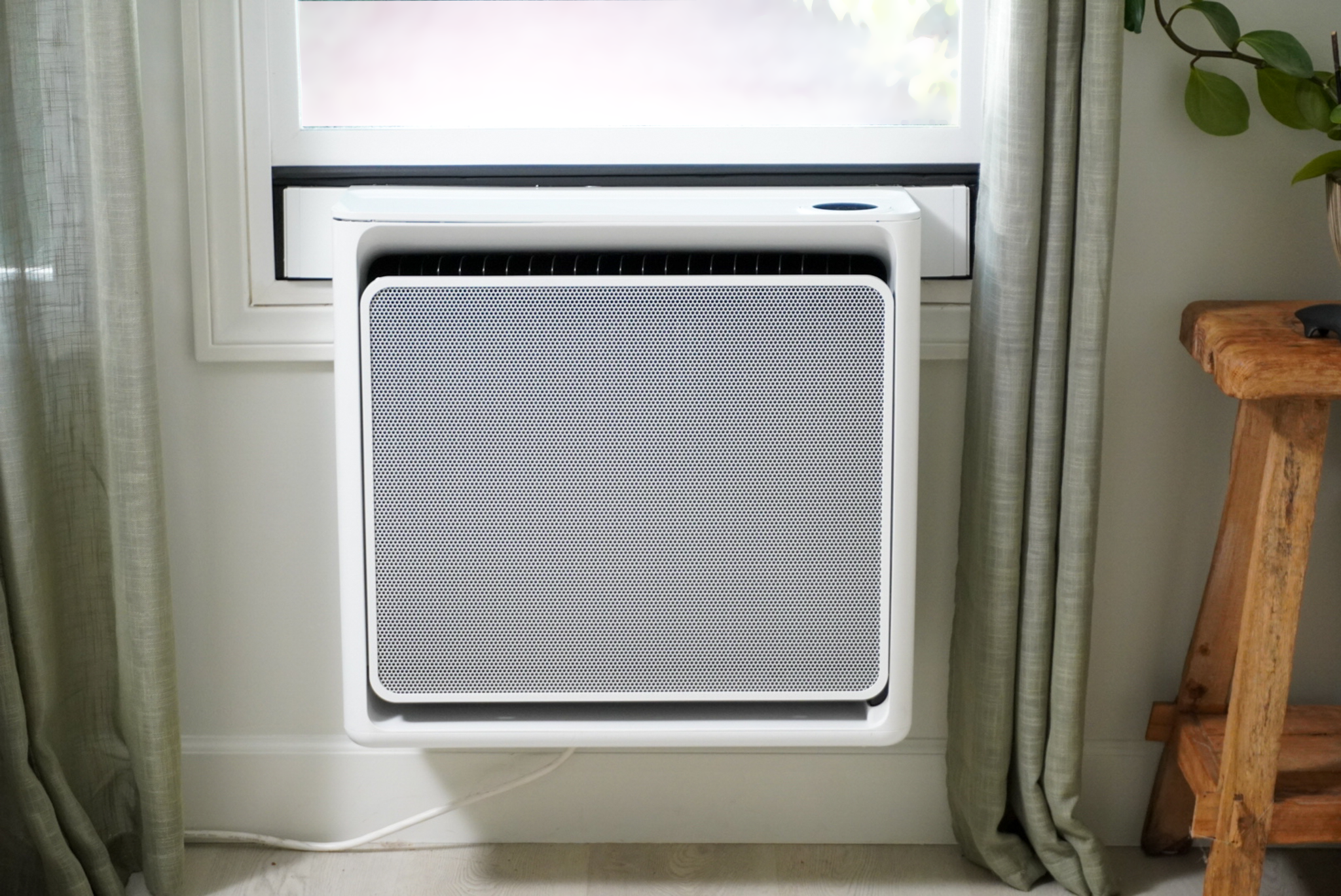
The Gradient All-Weather 120V™ heat pump was selected for Carroll Tower because it eliminates the primary barriers that have historically blocked electrification in older multifamily buildings: the need for costly electrical upgrades, invasive construction, and extended resident displacement.
Key Highlights:
-
- Plugs into a standard 120V outlet
- Installs in <30 mins with 2 people and basic hand tools
- Operates in outdoor temperatures as low as -13°F
Installation Approach
The installation of the equipment was done by Envr Air, a climate logistics company specializing in the deployment of heating and cooling equipment at scale. Their model is built around speed, coordination, and minimal disruption to residents and building operations.
For Carroll Tower, the crew was purpose-built for the scope of work: a Project Manager overseeing the full operation, two installation teams of two running simultaneously, a two-person assembly and runner team keeping equipment staged and ready. While one team is installing, equipment is already prepped and moving.
What made that possible was the preparation that happened well before installation day. Envr Air starts with a detailed site evaluation, identifying obstacles like elevator access and parking logistics. The team gets fully proficient with the specific equipment being deployed before work begins. Trial installations are completed on-site to validate the process in real conditions. From there, a full strategy is developed covering logistics, staging, and scheduling, then loaded into project management software. Stakeholders are informed of exactly what is happening and when, and the plan is adjusted in real time as conditions on the ground change. This structure is how 277 units got installed in a 15-story building in 12 days.
Energy Savings & Impact
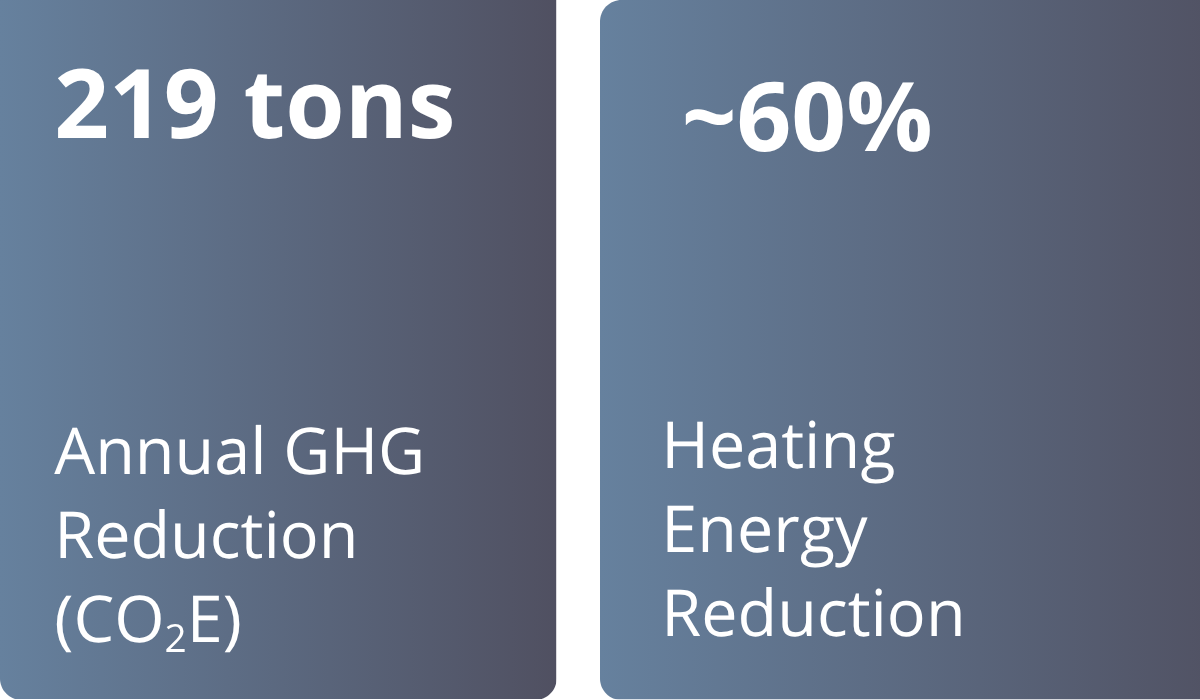
Based on the building’s energy profile and Gradient’s measured performance data, the Carroll Tower deployment is projected to deliver significant annual energy and emissions reductions, representing the transition from electric resistance baseboard heating (100% efficiency) to heat pump technology (200–400% efficiency, COP 2.0–4.0).
The estimated annual cost savings of approximately $94,500 across 194 households equates to roughly $487 per apartment per year. This includes savings for the 105 apartments that previously had no air conditioning, for whom the heat pumps deliver a new net comfort benefit at lower annual energy cost than any alternative cooling system would have been required.

Partnership Structure
The success of Carroll Tower required sustained collaboration across public and private sector organizations:
RI Office of Energy Resources (OER)
 |
Program oversight and RGGI funding; state commitment to clean energy in public housing |
Abode Energy Management

Providence Housing Authority (PHA)
 |
Building owner/manager; resident engagement, maintenance staff training, ongoing building operations |
Gradient
 |
Technology provider; supply of All-Weather 120V heat pumps, staff training, and ongoing monitoring support |
Envr Air
 |
Logistics-driven installation; completed building-wide deployment in 12 days with minimal resident disruption |
Lessons Learned & Replication Considerations
The Carroll Tower project generated important insights for housing authorities and program administrators considering similar deployments:
Contracting Complexity
The contracting process between Gradient, Envr Air, and PHA took 9 months, delaying the project from early 2025 to early 2026. Future projects should anticipate extended procurement timelines when working with public housing authorities and build in appropriate contingency.
WiFi Cost Estimation
The program’s initial WiFi infrastructure cost estimate proved significantly understated, adding $170,000 to the budget. Projects that include connected device monitoring should obtain detailed networking bids early in project planning to avoid budget shortfalls.
Resident Engagement
Floor-by-floor resident meetings and advance written notices were essential to building trust and ensuring smooth access for installation crews. Community meetings were held to introduce residents to the technology and provide use instructions. This community engagement model should be standard practice for any building-wide retrofit.
Speed of Deployment
Envr Air’s logistics model, combined with Gradient’s plug-and-play design, enabled 277 units to be installed in 12 days. This timeline is a significant proof point for the scalability of window heat pump retrofits in multifamily buildings. Traditional HVAC retrofits of this scale typically require 6–12 months.
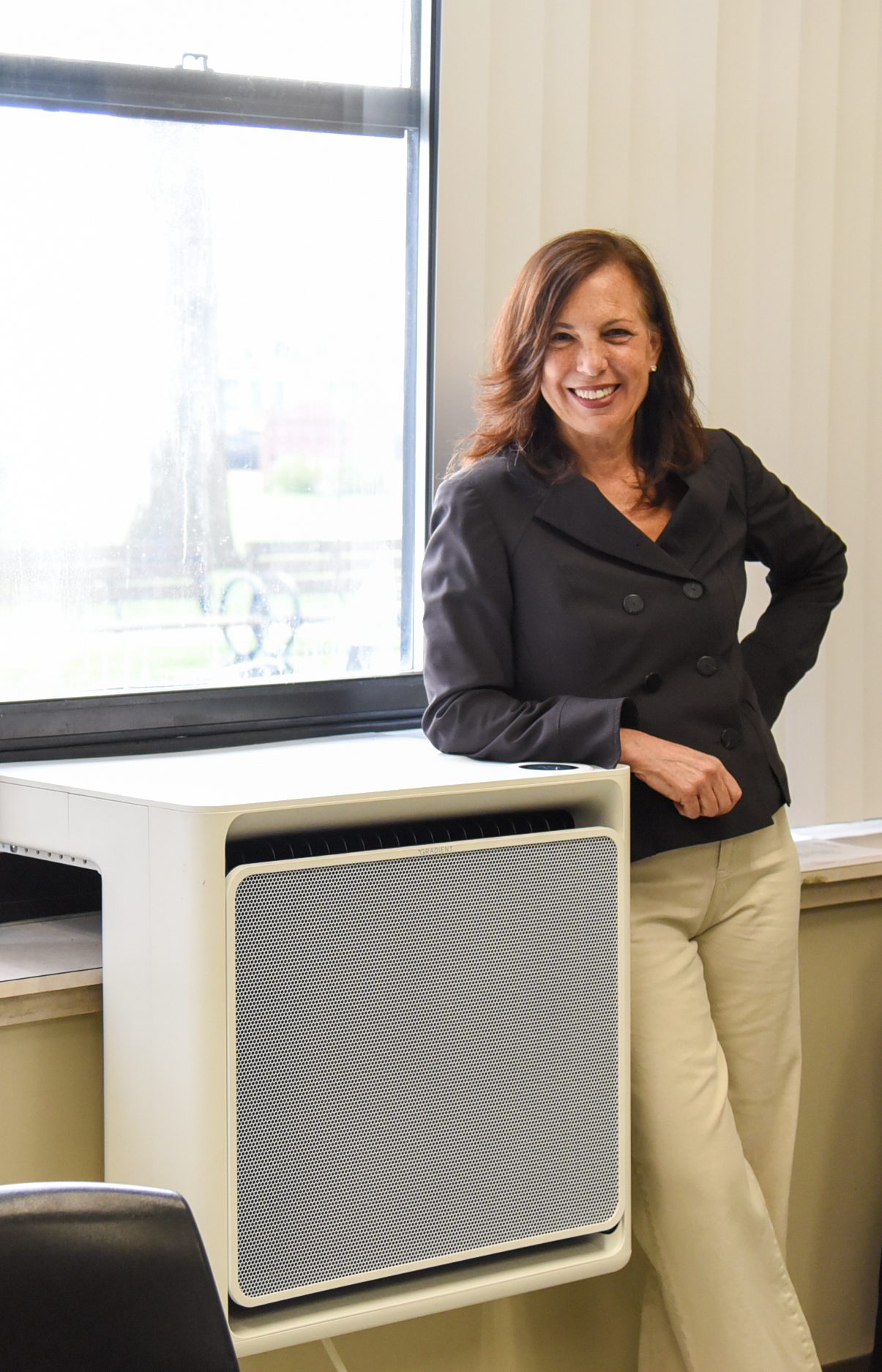
For more information, please reach out to:
Kristin Dupre (she/her) VP Strategy and Partnerships
Abode Energy Management
555 Virginia Rd, Suite 221. Concord, MA 01742
In the News
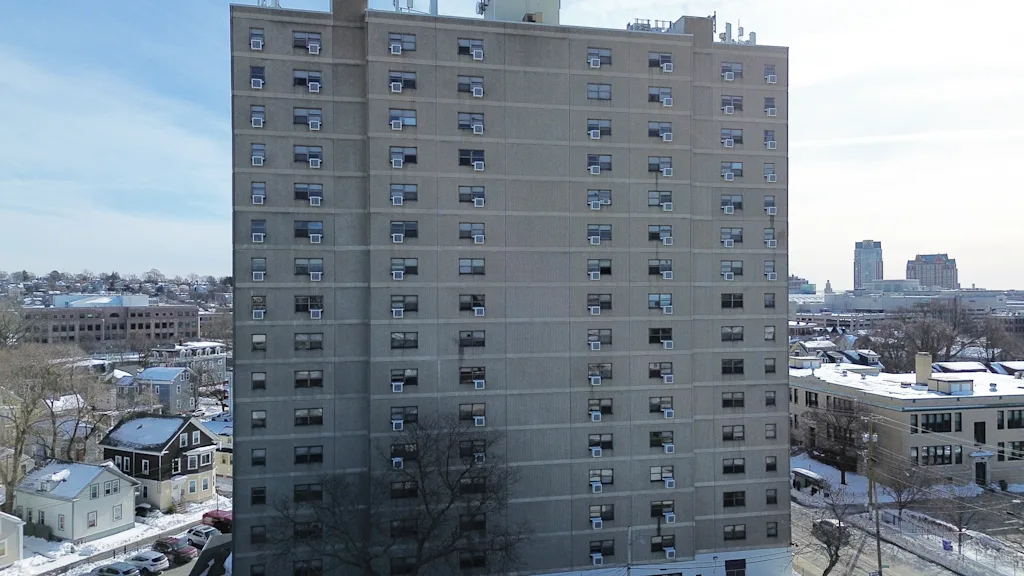
FastCompany: How a Rhode Island apartment building for seniors installed 277 heat pumps in just 12 days
The upgrade could save the building 450,000 kilowatt-hours, or about $94,500 in energy costs, a year, according to a preliminary estimate.